In Athlone, the difference between a stable road base and one that settles unevenly within two years often comes down to compaction control during construction. We see it on sites near the Shannon callows and in the glacial tills that underlie much of the town; the soil holds moisture stubbornly, and guessing the right water content is a gamble no contractor should take. The Proctor test removes that guesswork. By establishing the precise relationship between moisture and density for your specific fill material, we give your team a clear target: the optimum moisture content and the maximum dry density achievable with your compaction plant. This isn't just a box-ticking exercise for the resident engineer; it directly determines how many passes the roller needs and whether the material you're importing from the quarry is actually suitable. On large Athlone commercial developments, combining early lab compaction data with field checks like the sand cone density test keeps the earthworks programme on track and prevents costly re-rolling or layer rejection.
A Proctor test run on the wrong fraction of your fill can cost more than skipping the test altogether.
Service characteristics in Athlone
Risks and considerations in Athlone
The glacial deposits around Athlone, particularly the lodgement tills that sit above the Carboniferous limestone bedrock, are notoriously variable in moisture sensitivity. A fill that compacts beautifully at 11% moisture content can turn to sponge at 13%, especially in the damp autumn months when the Shannon valley holds fog and drizzle for days. Without a laboratory Proctor curve specific to the source material being placed, the field engineer has no reference for whether 92% relative compaction has actually been achieved or whether the nuclear gauge reading reflects a material that is simply too wet to reach its target density. We have seen Athlone housing sites where poorly controlled fill settlement led to differential movement in lightly loaded strip footings within the first year, a defect that costs multiples of the compaction testing budget to rectify. A proper Proctor test, run early and repeated when the borrow source changes, is cheap insurance against earthwork failure.
Our services
Our Athlone compaction testing service covers the full workflow from laboratory Proctor determination to field verification. We handle sampling from your stockpile or borrow pit, run the appropriate standard or modified test, and deliver the compaction curve with clear target values that your site team can use immediately.
Standard Proctor (IS EN / ASTM D698)
For typical fill applications under footpaths, landscaping, and low-rise residential slabs. Uses the 2.5 kg rammer to establish the baseline compaction curve for soils with limited coarse fraction.
Modified Proctor (IS EN / ASTM D1557)
For engineered fill under highways, heavy industrial floors, and deep utilities in Athlone. The higher compactive effort matches modern plant output and yields a more demanding density target.
Compaction Control Package
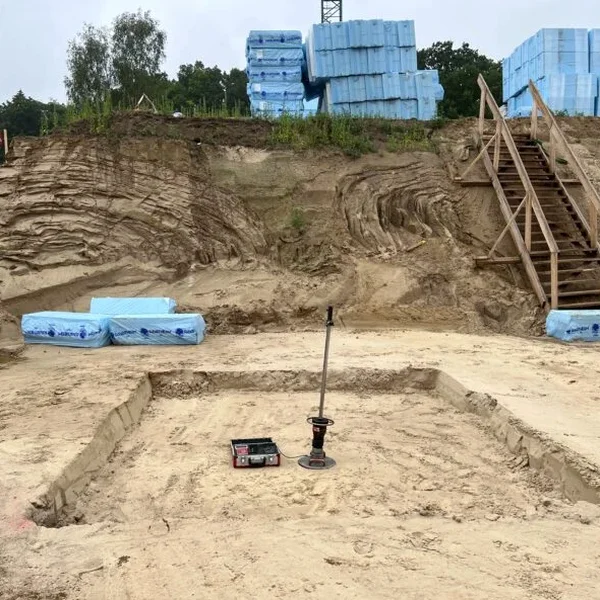
We combine laboratory Proctor tests with on-site nuclear gauge or sand cone density checks, giving your foreman real-time feedback on achieved relative compaction and moisture deviation from optimum.
Frequently asked questions
How long does a Proctor test take for an Athlone site?
A standard or modified Proctor test typically requires three to four working days from sample receipt to issued report. The compaction process in the laboratory takes about two hours per point on the curve, but the full drying and weighing cycle, plus the plotting and quality review, adds to the turnaround. If your earthworks programme is tight, we can prioritise rush samples and provide the optimum moisture content figure by phone the moment the curve is validated.
What is the difference between standard and modified Proctor, and which one do I need?
The standard Proctor (2.5 kg rammer, 300 mm drop) simulates the compactive effort of older, lighter rollers. The modified Proctor (4.5 kg rammer, 450 mm drop) replicates the energy of modern vibratory compactors. For Athlone projects following TII or NRA specifications, modified Proctor is normally required for road capping and sub-base layers, while standard Proctor may be acceptable for general backfill around structures. We can advise based on your specific specification clause.
How much does a Proctor test cost in Athlone?
A standard or modified Proctor test in Athlone runs between €110 and €220 per sample, depending on the mould size required and whether the material needs preparation such as scalping on the 20 mm or 37.5 mm sieve. Multi-sample packages for large earthworks projects bring the per-unit cost down, and we include the full compaction curve with the optimum moisture and maximum dry density clearly tabulated.
What sample size do you need for the Proctor test?
We need about 25 kg of representative disturbed material for a 100 mm mould test, and closer to 45 kg if the fill contains gravel and requires the 150 mm diameter mould. The sample should be taken from the active borrow source or stockpile, sealed immediately in a heavy-duty plastic bag to preserve its natural moisture, and delivered to our laboratory within 24 hours. If the material is coarse, we will discuss scalping procedures to ensure the test is run on the correct fraction.