In Athlone, the integrity of any structure begins with a properly designed foundation. This category covers the full spectrum of ground engineering solutions required to transfer building loads safely to the underlying soil or rock. From residential extensions along the banks of the River Shannon to multi-storey commercial developments in the town centre, the performance of a foundation directly affects structural stability, settlement control, and long-term durability. Without a thorough understanding of local ground behaviour, even well-constructed buildings can suffer from cracking, differential movement, or water ingress.
Athlone's location astride the Shannon presents a varied geological profile that demands careful assessment. Glacial deposits, including tills and gravels, dominate much of the area, often overlying Carboniferous limestone bedrock. These superficial deposits can be highly variable in thickness and composition, with pockets of soft alluvial silts and clays found near the river corridor. The water table is typically high, especially in low-lying areas close to the Shannon and its tributaries, which increases the risk of buoyancy issues and requires robust water management during excavation. In some peripheral townlands, the presence of peat or marl adds further complexity, necessitating specialist foundation approaches such as pile foundation design to reach competent bearing strata.
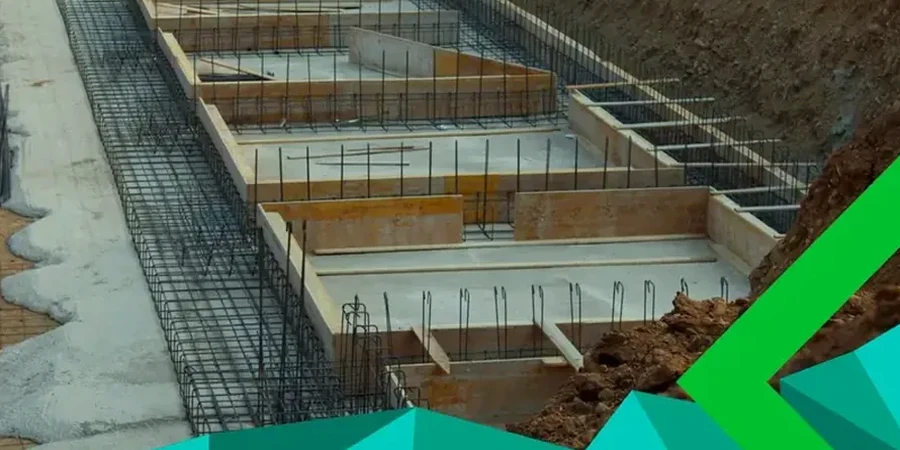
All foundation works in Ireland must comply with the Building Regulations (Part A – Structure) and adhere to the Irish Standard I.S. EN 1997-1:2004 (Eurocode 7: Geotechnical design), along with the Irish National Annex. These documents set out the principles for geotechnical investigation, limit state design, and execution. In practice, this means a site investigation to I.S. EN 1997-2 is mandatory before design, with in-situ testing such as standard penetration tests or cone penetration tests commonly specified. The local authority, Westmeath County Council, enforces compliance through the Building Control Management System, and a competent chartered engineer must certify foundation designs. For projects in flood-prone zones, additional guidance from the OPW's flood maps and CFRAM studies must be integrated into the geotechnical risk assessment.
The types of projects requiring engineered foundations in Athlone are diverse. Traditional strip footings often suffice for single dwellings on firm glacial till, but larger commercial units, apartment blocks, and infrastructure like bridge abutments or retaining walls along the Shannon call for more advanced solutions. Renovations within Athlone's historic core may demand underpinning or mini-piling to protect adjacent structures. Industrial sheds at the IDA Business Park or logistics centres along the M6 corridor frequently rely on ground improvement or deep piles to accommodate heavy floor loadings on marginal ground. Even agricultural buildings and wind turbine bases in rural parts of South Roscommon, served by Athlone-based engineers, require geotechnical input to meet structural and environmental standards.
Available services
Frequently asked questions
What are the main factors that influence foundation choice in Athlone?
The dominant factors include the type and depth of glacial deposits, the presence of a high water table near the Shannon, and the proximity to limestone bedrock. Ground investigation data, structural loads, and sensitivity of adjacent buildings also dictate whether shallow pads or deep piles are required under Eurocode 7.
Is a site investigation always necessary before designing a foundation in County Westmeath?
Yes, a geotechnical site investigation to I.S. EN 1997-2 is mandatory for any structure requiring building control approval. It characterises soil strength, compressibility, and groundwater conditions, providing the design parameters needed to satisfy Part A of the Building Regulations and prevent future settlement issues.
How do the flood plains of the River Shannon affect foundation design?
High groundwater and flood risk demand careful consideration of buoyancy, scour, and watertightness. Foundations may need to be deepened below flood-scour depths, and lightweight fill or piled solutions might be specified. OPW flood mapping must be reviewed to establish design flood levels for the site.
What are the signs that a property in Athlone might need foundation remediation?
Cracks wider than 5mm in walls, sticking doors or windows, and uneven floors often indicate differential settlement. In Athlone, this can stem from desiccation of clay soils, leaking drains washing out granular subsoils, or decay of timber piles in older riverside structures. A structural engineer's assessment is essential.