Athlone sits right on the River Shannon at 56 metres above sea level. The floodplain geology here is deceptive. You might see firm ground at surface level but underneath it is often soft alluvium and glacial till that behaves unpredictably under load. Our team has run soil mechanics investigations from the west bank at Coosan to the industrial estates east of Garrycastle. The stratigraphy changes fast. A project near the marina will encounter completely different bearing conditions than one up on the Ballymahon Road. We combine local drilling with lab testing to give you numbers you can actually use for foundation design. In many cases we run in-situ permeability tests alongside sampling because groundwater in Athlone is so closely tied to the Shannon and its tributaries.
In Athlone, the depth to competent bearing stratum can shift by over three metres within the footprint of a single house.
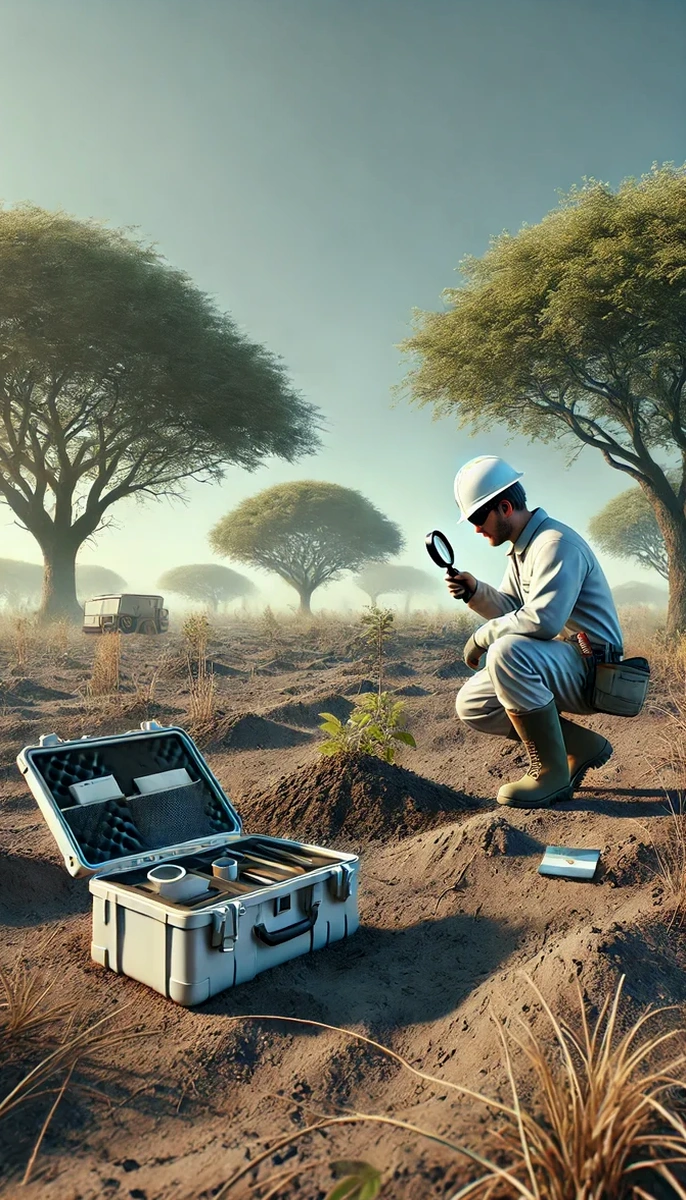
Service characteristics in Athlone
Demonstration video
Risks and considerations in Athlone
Athlone grew as a river crossing town. The oldest buildings cluster around the castle and the narrow streets near the Shannon. Those structures sit on centuries of made ground and archaeological fill. The newer residential developments pushed into former flood meadows where the soil profile is young and compressible. We have seen total settlements exceed 40 mm under pad footings on the east side when the upper silt layer was not properly characterised. Differential settlement is the number one problem in Athlone. Not bearing failure. The ground moves slowly and unevenly. That is why we push for CPT testing and laboratory consolidation tests on any site within 500 metres of the river. The data changes the foundation design. It is that simple.
Our services
Our soil mechanics investigation in Athlone follows a phased approach. We start with a walkover survey and then design a ground investigation that matches the site constraints. Every project gets a factual report first, then an interpretative report with foundation recommendations.
Site Investigation and Sampling
Cable percussive and rotary drilling across Athlone town and the surrounding Midlands. We log to IS EN ISO 14688 standards and recover disturbed and undisturbed samples from the alluvium and till layers.
Geotechnical Laboratory Testing
Classification tests, one-dimensional consolidation, triaxial compression and shear box testing run from our accredited lab. We determine effective stress parameters for settlement and bearing capacity analysis.
Frequently asked questions
How deep do you need to drill for a soil mechanics study in Athlone?
It depends on the proposed foundation type and the location relative to the Shannon. On the west side, 6 to 8 metres is often enough to hit competent gravel. On the east side near Monksland we routinely go to 10 or 12 metres because the soft silt layer can be surprisingly thick. We always extend at least 3 metres into dense material to confirm it is not a lens.
What does a soil mechanics study cost for a typical house in Athlone?
For a single residential site in Athlone, the soil mechanics study typically falls between €2.850 and €5.240. The range accounts for access conditions, depth of investigation and the number of lab tests required. Soft-ground sites on the east side tend toward the upper end because we need more sampling and consolidation testing.
Do you test for pyrite or aggressive ground conditions?
Yes. We run chemical testing on soil and groundwater samples following BRE Special Digest 1 guidance. The glacial tills around Athlone can contain sulfates that affect concrete specification. We test pH, sulfate content and potential for thaumasite attack. This is standard practice in our investigations, not an add-on.
How long does it take to get the geotechnical report?
Fieldwork on a standard residential site takes one to two days. Laboratory testing runs for about two weeks for basic classification and strength tests. Consolidation tests take longer. We deliver the factual report within three weeks and the interpretative report within four weeks of completing fieldwork.